

If you treat Pinterest like social media, you’ll get social media results.
If you treat Pinterest like a search engine, you’ll get search engine traffic.
Pinterest is not just a platform for inspiration — it’s a visual discovery engine where users actively search for ideas, products, and solutions. That means Pinterest keyword research is the foundation of visibility, growth, and sales.

In this guide, you’ll learn:
- What Pinterest keyword research actually means
- How to find high-intent keywords
- How to use Pinterest Trends properly
- The best Pinterest keyword tools
- Where to place keywords for maximum reach
- How to build a sustainable keyword strategy
Let’s dive in.
What Is Pinterest Keyword Research?
Pinterest keyword research is the process of identifying the exact words and phrases users type into Pinterest’s search bar — and strategically using them in your content.
Unlike Instagram, Pinterest content doesn’t disappear in 24 hours. A well-optimized Pin can generate traffic for months or even years.
Pinterest ranks content based on:
- Pin title keywords
- Pin description keywords
- Board names
- Board descriptions
- Profile bio
- Engagement signals
If your content matches what users are searching for, Pinterest shows it.
Simple in theory. Strategic in execution.

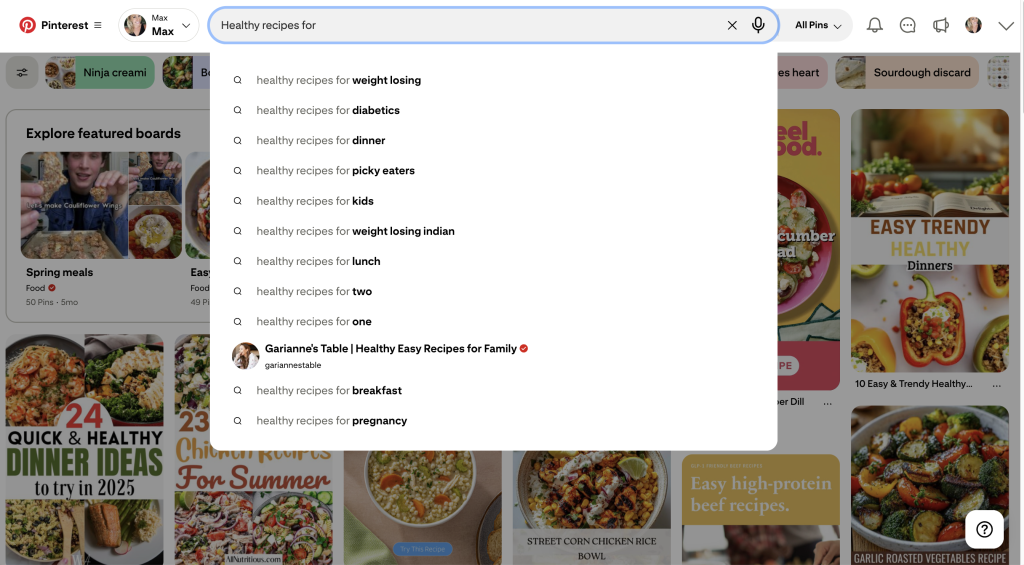
Step 1: Use Pinterest Search Bar (Primary Keyword Source)
The Pinterest search bar is your first research tool.
How to do it:
- Open Pinterest
- Start typing your main topic
- Observe the auto-suggested phrases
Example:
Type “summer outfit”
You may see:
- summer outfit ideas
- summer outfit women
- summer outfit aesthetic
- summer outfit for Europe
These are real user searches. Pinterest suggests them because people are actively searching.
These become your:
- Primary keywords
- Long-tail variations
- Content ideas
Bonus: Colored Keyword Bubbles
After searching, you’ll see colored keyword tiles under the search bar.
These represent related modifiers.
For example:
“summer outfit” + “casual” + “Europe” + “2026”
Combine them to create long-tail phrases like:
“Casual Summer Outfit Ideas for Europe 2026”
Long-tail keywords usually convert better because they reflect specific intent.
Step 2: Use Pinterest Trends (For Seasonal Strategy)
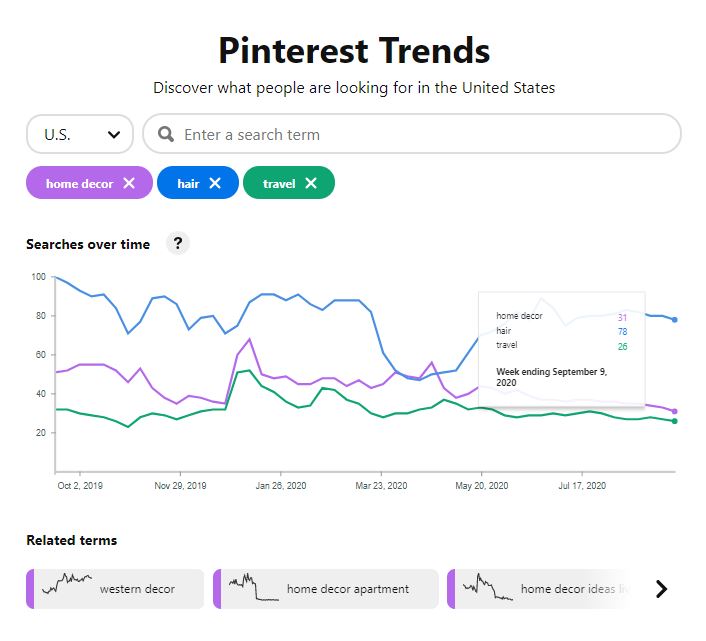
Pinterest Trends is an official tool that shows search interest over time.
Why this matters:
Pinterest users plan early.
Examples:
- Christmas decor searches begin in October
- Wedding ideas are searched months in advance
- Summer outfits trend in spring
How to use Pinterest Trends:
- Compare keyword variations
- Identify peak months
- Check country-specific data
- Discover related rising searches
This helps you post content 30–90 days before peak demand.
For e-commerce brands, coaches, digital product sellers, and lifestyle businesses, this timing strategy alone can dramatically increase reach.
Step 3: Analyze Top Ranking Pins
Search your main keyword.
Study the top results:
- What phrases are repeated?
- How are titles structured?
- What words appear in descriptions?
- What boards are they saved under?
Pinterest leaves clues.
If multiple high-performing Pins use similar phrasing, that wording likely matters.
This is competitive keyword validation without paid tools.
Step 4: Use Pinterest Keyword Tools (Optional but Powerful)
If you want deeper insights, here are popular tools:
1. Tailwind
- Keyword suggestions
- Content insights
- Scheduling + analytics
2. Pin Inspector
- Search volume insights
- Competition analysis
3. Semrush
- Cross-platform keyword overlap
- Blog + Pinterest SEO alignment
However, for most beginners, Pinterest search + Pinterest Trends are sufficient.
Step 5: Understand Keyword Types on Pinterest
You should target three layers:
1. Broad Keywords
Example: “Home decor”
High search volume. High competition.
2. Niche Keywords
Example: “Minimalist home decor ideas”
More specific. Better targeting
3. Long-Tail Keywords
Example: “Minimalist home decor ideas for small apartments”
Lower competition. Higher intent. Better conversions.
For brands looking to generate traffic that leads to sales, long-tail keywords are essential.
Step 6: Where to Place Keywords on Pinterest
Pinterest reads more than you think.
Place keywords in:
- Profile name
- Bio
- Board titles
- Board descriptions
- Pin titles
- Pin descriptions
- Text overlay on the image
Avoid keyword stuffing.
Instead of:
“Summer outfit summer outfit ideas summer outfit women”
Use:
“10 Chic Summer Outfit Ideas for Women Traveling to Europe”
Natural language performs better and improves click-through rates.
Step 7: Build a Pinterest Keyword Bank
Professional Pinterest marketers don’t guess each week.
They create a keyword database.
Your spreadsheet should include:
- Main keyword
- Related keywords
- Seasonality
- Content idea
- Published link
- Impressions
- Saves
- Clicks
Over time, this becomes your internal SEO asset.
This is how consistent Pinterest growth happens.
Common Pinterest Keyword Mistakes
- Posting seasonal content too late
- Using Instagram hashtags instead of keywords
- Not optimizing board names
- Ignoring long-tail phrases
- Designing beautiful Pins with zero search intent
Pinterest rewards relevance and timing — not just aesthetics.

Final Thoughts
Pinterest keyword research is not complicated — but it requires structure.
When you understand:
- How users search
- When trends rise
- Where keywords should be placed
Pinterest becomes predictable.
And predictable traffic builds sustainable growth.
Need Help With Pinterest SEO?
At Novessa Digital, we build full-funnel Pinterest strategies that combine:
- Keyword research
- Organic growth
- Pinterest SEO
- Paid ads
- Landing page optimization
- Email marketing integration
Because traffic without strategy doesn’t convert.
If you’re ready to turn Pinterest into a traffic engine instead of a guessing game, explore our Pinterest growth services today.